Developing a medical plastic component is only the first step toward successful medical device manufacturing. A prototype may meet its initial design requirements, but transferring that design into stable, repeatable mass production introduces additional challenges. Mold performance, material consistency, injection parameters, dimensional tolerances, and manufacturing conditions all need to be evaluated before production can be scaled up.
For medical device OEMs, selecting an experienced medical injection molding partner is therefore an important part of the product development process. A qualified manufacturing partner should understand not only mold fabrication and plastic processing, but also production validation, quality documentation, and risk management.
This article explains the key stages involved in moving a medical device injection mold project from prototype development to commercial production.
A successful prototype demonstrates that a component's basic design can be manufactured. However, prototype production and mass production have different manufacturing requirements.
During prototype development, engineers may use simplified tooling or limited production conditions. Commercial manufacturing requires a more controlled process that can consistently produce components within approved specifications.
Several factors may change during production scale-up:
Mold structure: Production molds may require different cavity configurations, cooling channels, and ejection systems.
Material consistency: Resin grades, suppliers, and material batches must be controlled.
Process stability: Injection pressure, temperature, cooling time, and cycle conditions require evaluation.
Production environment: Cleanroom requirements and contamination controls may apply to specific medical components.
Inspection requirements: Critical dimensions and functional characteristics need defined acceptance criteria.
For example, a medical plastic housing may pass prototype inspection but develop dimensional variation during repeated production cycles.
This is why a successful prototype should be treated as an engineering milestone rather than automatic approval for mass production.
Before manufacturing a production mold, the product design and manufacturing requirements should be reviewed together.
A suitable medical device injection mold should account for part geometry, wall thickness, gate location, cooling efficiency, ejection, and expected production volume.
Poorly designed gating or cooling systems may contribute to warpage, sink marks, or dimensional inconsistencies.
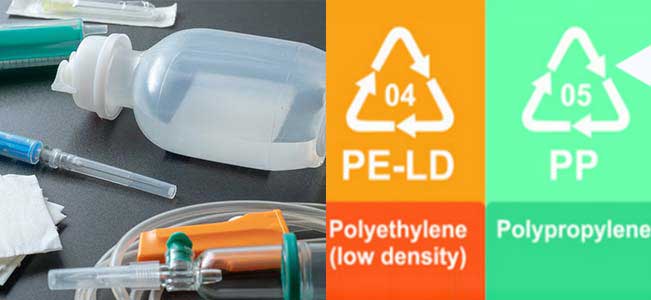
Medical plastic components may use materials such as polypropylene (PP), polycarbonate (PC), polyethylene (PE), and other engineering polymers.
Material selection should consider the component's intended function, mechanical requirements, chemical exposure, sterilization method, and applicable biocompatibility requirements.
The term medical grade should not be treated as a universal certification. Material suitability must be evaluated for the specific device and intended use.
Important injection molding parameters include:
Melt and mold temperatures.
Injection pressure and speed.
Holding pressure and time.
Cooling time.
Cycle consistency.
These parameters should be developed and documented according to the material, mold design, and component requirements.

Process validation provides documented evidence that a manufacturing process can consistently achieve its intended results when direct verification of every output characteristic is not sufficient or practical.
Three commonly used stages are IQ, OQ, and PQ.
| Stage | Full Name | Main Purpose |
|---|---|---|
| IQ | Installation Qualification | Confirms equipment and supporting systems are installed according to requirements |
| OQ | Operational Qualification | Evaluates whether equipment operates within defined operating conditions |
| PQ | Performance Qualification | Demonstrates that the process can consistently produce acceptable results under intended production conditions |
IQ verifies equipment installation, utilities, supporting systems, and relevant documentation. For injection molding, this may include checking machine configuration, electrical connections, and auxiliary equipment.
OQ evaluates process performance across defined operating ranges. Engineers may assess how different injection and cooling parameters affect product quality.
PQ evaluates the process under intended production conditions using appropriate production materials, tooling, and operating procedures.
The exact validation approach should be determined through the manufacturer's quality management system and the applicable regulatory requirements.
For medical manufacturing projects, validation records should be maintained and reviewed when relevant equipment, materials, tooling, or process conditions change.
Reliable medical plastic molding requires risk management throughout the manufacturing process, not only final product inspection.
Several common manufacturing risks deserve attention.
Changes in material shrinkage, mold temperature, and cooling conditions may affect critical dimensions. Inspection plans should identify important measurements and define suitable acceptance criteria.
Flash, sink marks, short shots, and warpage can affect product appearance or functionality. Their possible causes should be investigated through process monitoring and mold inspection.
Material specifications, supplier controls, and batch traceability help reduce the risk of unintended material changes.
For components manufactured in controlled environments, handling procedures, environmental monitoring, and packaging controls should reflect the product's actual contamination requirements.
Packson provides medical plastic injection molding, cleanroom manufacturing, and secondary processing capabilities. These services can support OEM projects requiring coordinated mold development, component manufacturing, and subsequent assembly operations.
Choosing a manufacturing partner requires evaluating engineering capability alongside production and quality management.
Medical device OEMs should consider:
Mold engineering: Can the supplier review product drawings and identify potential manufacturability issues?
Material management: Can the supplier maintain documented material specifications and traceability?
Manufacturing capability: Are the available machines and production environments suitable for the component?
Process validation: Can the supplier support relevant equipment and process qualification activities?
Quality documentation: Are inspection records, production records, and change-control procedures available?
Secondary operations: Can the supplier support assembly, ultrasonic welding, heat staking, and other required processes?
Packson offers customized medical injection molding and mold manufacturing services, supported by cleanroom production and secondary processing capabilities.
OEM customers can explore its medical plastic injection molding services and cleanroom injection molding capabilities.
Moving from prototype development to mass production requires careful coordination of mold engineering, material selection, process development, validation, and quality management.
A successful medical injection molding project is not defined only by whether the first molded sample meets its dimensions. The manufacturing process must also be capable of repeatedly producing components that meet approved specifications under controlled production conditions.
For medical device OEMs, working with an experienced manufacturing partner can simplify this transition. Packson supports customized medical plastic molding projects through mold development, injection molding, cleanroom manufacturing, and secondary processing.
Contact Packson with your component drawings, material requirements, expected production volume, and quality specifications to discuss a suitable manufacturing solution.
A medical device injection mold is a precision tool used to manufacture plastic components for medical devices through injection molding. Its design must account for component geometry, material characteristics, dimensional requirements, and production conditions.
Process validation provides documented evidence that a manufacturing process can consistently achieve its intended results. It helps establish controlled production conditions and reduce risks associated with manufacturing variation.
IQ means Installation Qualification, OQ means Operational Qualification, and PQ means Performance Qualification. Together, these activities help verify equipment installation, operating conditions, and production performance.
Common materials include PP, PC, PE, and other engineering polymers. The appropriate material depends on mechanical requirements, chemical compatibility, sterilization conditions, and the intended medical device application.
A project should move toward mass production when the product design, mold configuration, material specifications, manufacturing process, inspection criteria, and applicable validation activities have been adequately reviewed and approved.

Contact Us
 English
 日本語
 Deutsch
 Español