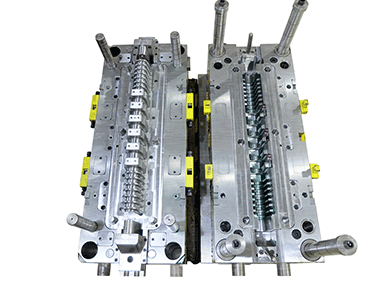
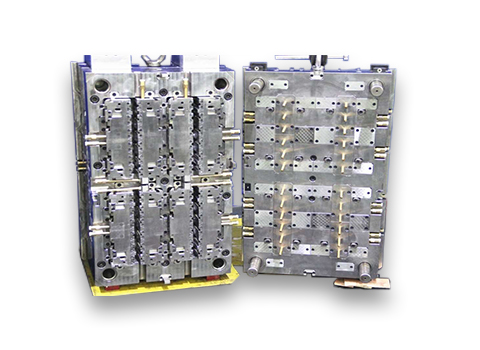
Turning a medical product design into thousands or millions of identical components is one of the biggest challenges in modern medical manufacturing. A prototype may meet all initial requirements, but maintaining the same dimensional accuracy during continuous production requires much more than a good product design—it requires precise control of every factor that influences molding consistency.
This is where the quality of a medical plastic mold becomes critical. The mold serves as the foundation for repeatable production, determining whether each molded component can maintain the required dimensions, structural integrity, and functional performance throughout the manufacturing cycle.
For medical manufacturers, tolerance control is not only about achieving a specific measurement on a drawing. It involves managing material behavior, mold structure, processing conditions, and inspection accuracy to ensure that every plastic injection molding medical parts project delivers stable and dependable results.
With increasing demand for advanced healthcare products, medical components are becoming smaller, more complex, and more sensitive to dimensional variations. Packson-Mould applies precision engineering methods and strict manufacturing controls to help customers develop reliable molding solutions that meet the challenges of modern medical production.
In medical manufacturing, dimensional consistency directly affects product safety, assembly performance, and long-term reliability. Unlike general plastic products, many medical components must work together with other precision parts or maintain strict functional requirements during use.
A small dimensional deviation in components such as diagnostic device housings, laboratory consumables, surgical instrument parts, or fluid control components may result in assembly difficulties, leakage risks, or inconsistent performance. Therefore, maintaining accurate tolerances throughout the molding process is essential.
A precision medical plastic mold helps manufacturers reduce variation between production batches by providing stable shaping conditions. When the mold structure, machining accuracy, and molding parameters are properly controlled, manufacturers can achieve higher repeatability and fewer quality issues.
For companies searching for reliable tooling solutions, Packson-Mould provides professional mold engineering and manufacturing capabilities. Businesses can explore precision medical plastic mold solutions and injection molding capabilities designed for different healthcare applications and production requirements.
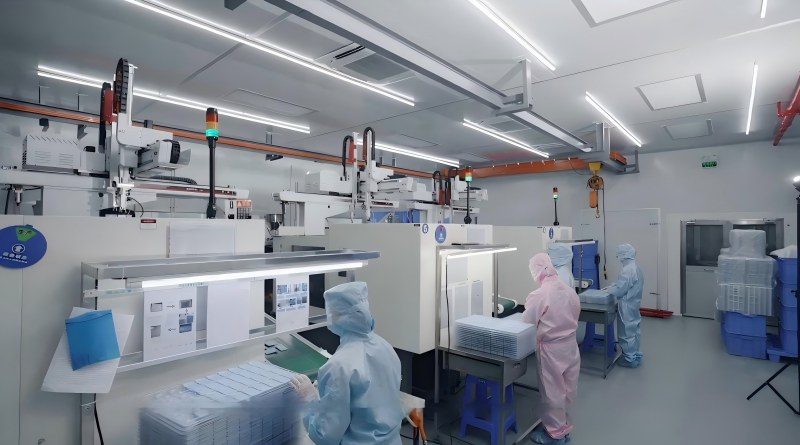
The tolerance requirements of a medical plastic mold depend on the application, component design, material properties, and production expectations. Different medical products require different levels of dimensional control, especially when they involve tight assembly structures or critical functional features.
Compared with standard plastic components, medical parts usually require more careful tolerance management because even small dimensional changes can influence product performance. Engineers must consider not only the final part dimensions but also how materials behave during injection molding.
| Tolerance Category | Key Control Factors | Influence on Medical Components |
|---|---|---|
| Dimensional Accuracy | Mold machining precision, shrinkage compensation, and process stability | Ensures proper assembly and consistent product performance |
| Surface Quality | Mold finish, polishing process, and material characteristics | Affects appearance, cleanliness, and functional performance |
| Geometric Precision | Mold structure design, alignment, and manufacturing accuracy | Maintains complex shapes and precise component relationships |
| Material Shrinkage Control | Resin selection, cooling conditions, and molding parameters | Reduces dimensional variation after molding |
For plastic injection molding medical parts, achieving the required tolerance level requires cooperation between mold design and production process control. Factors such as injection pressure, cooling time, temperature stability, and material flow behavior all influence the final dimensions of molded components.
Producing accurate medical components requires more than precision machining. A combination of engineering experience, suitable materials, advanced manufacturing equipment, and strict quality control determines the overall performance of a medical plastic mold.
The material selected for mold manufacturing has a direct impact on durability and dimensional stability. Medical molds are commonly produced using high-quality tool steels because they can withstand repeated injection cycles while maintaining structural accuracy.
A suitable mold material helps minimize deformation, wear, and dimensional changes during long-term production. This is especially important for medical applications where consistent output quality is required.
Advanced machining technologies play an essential role in achieving accurate mold dimensions. CNC machining, precision grinding, and electrical discharge machining (EDM) allow manufacturers to produce complex mold features with high accuracy.
These technologies are particularly important for medical components with thin walls, small structures, micro features, or complex geometries. Even minor machining deviations can influence the final performance of molded parts.
Different medical-grade plastics have unique shrinkage rates, thermal expansion behaviors, and flow characteristics. Materials must be carefully evaluated during mold design to ensure that the finished components maintain their intended dimensions.
Understanding material behavior allows engineers to optimize mold structures and compensate for potential dimensional changes during the molding process, improving the consistency of plastic injection molding medical parts.
Mold design is one of the most important stages in achieving accurate and consistent medical components. A well-engineered medical plastic mold must consider not only the shape of the final product but also how plastic materials flow, cool, shrink, and solidify during injection molding.
Proper mold design helps control many factors that influence dimensional accuracy, including parting line positioning, gate location, cooling channel layout, ejection structure, and cavity balance. Any weakness in these areas may lead to problems such as warpage, uneven shrinkage, or inconsistent part dimensions.
For example, medical components with thin walls or complex internal structures require optimized cooling systems to prevent deformation after molding. Similarly, precise gate design helps ensure balanced material flow and reduces stress concentration that may affect component performance.
In plastic injection molding medical parts production, mold design also needs to consider future production stability. A mold that performs well during initial trials but lacks long-term durability may create inconsistent results during high-volume manufacturing. Therefore, professional engineering analysis before production is essential.
Manufacturing accuracy is only one part of achieving reliable medical molding performance. Continuous inspection and quality verification are equally important for ensuring that a medical plastic mold maintains its designed specifications throughout its service life.
Modern mold manufacturers use advanced measurement technologies to evaluate critical dimensions, surface conditions, and geometric accuracy. These inspection processes help identify potential issues before they affect production quality.
| Inspection Method | Purpose in Medical Mold Manufacturing |
|---|---|
| Coordinate Measuring Machine (CMM) | Measures complex mold dimensions and verifies geometric accuracy |
| Optical Inspection | Checks small features, surface conditions, and precision details |
| Surface Roughness Testing | Ensures mold finishing quality meets application requirements |
| Mold Trial Testing | Confirms molding performance and identifies production adjustments |
| Sample Part Measurement | Verifies that molded components meet dimensional specifications |
For manufacturers producing plastic injection molding medical parts, quality inspection should continue throughout the entire production process. Monitoring molded samples, adjusting processing parameters, and maintaining equipment stability all contribute to consistent product quality.
Achieving stable precision in medical molding requires a complete quality management approach rather than relying on a single manufacturing step. From early design analysis to final production inspection, every stage influences the performance of the finished medical components.
The first step is optimizing mold design before manufacturing begins. Engineers should evaluate potential risks related to material shrinkage, filling performance, cooling efficiency, and structural strength. Early analysis can reduce design problems and improve production reliability.
Selecting appropriate materials is also essential. Medical-grade plastics must match the requirements of the application, including mechanical strength, chemical resistance, sterilization conditions, and dimensional stability.
During production, maintaining stable injection molding parameters is equally important. Consistent temperature control, injection pressure, cooling conditions, and equipment maintenance help minimize variation between production cycles.
A professional mold partner can also improve project efficiency by providing engineering support throughout the development process. Packson-Mould combines precision manufacturing capabilities with quality-focused production methods to support demanding medical applications.
Companies looking for expert guidance on medical plastic mold projects can contact Packson-Mould’s engineering team for mold consultation and project evaluation.
Tolerance control is a fundamental requirement for successful medical manufacturing. A high-quality medical plastic mold provides the foundation for producing accurate, reliable, and repeatable medical components. From material selection and mold design to precision machining and inspection, every stage contributes to the final quality of the product.
As medical devices continue to become more advanced, manufacturers need molding solutions that can deliver consistent performance under increasingly demanding requirements. By combining professional engineering, accurate tooling, and strict quality management, companies can improve production efficiency and achieve better results in plastic injection molding medical parts.
Packson-Mould supports medical manufacturing projects with precision-focused mold development and production expertise, helping customers achieve stable quality and reliable manufacturing outcomes.
Tolerances ensure that medical components maintain accurate dimensions, proper assembly performance, and reliable functionality during production and use.
Key factors include mold material, machining accuracy, plastic properties, mold design, injection parameters, and inspection processes.
Mold design affects material flow, cooling performance, shrinkage control, and the final dimensional accuracy of molded medical parts.
Common inspection methods include CMM measurement, optical inspection, surface testing, mold trials, and molded part verification.
Different medical plastics have different shrinkage and performance characteristics, so selecting suitable materials helps maintain dimensional stability.
Manufacturers can improve consistency through optimized mold design, stable production parameters, accurate inspection, and continuous quality control.

Contact Us

 English
  日本語
日本語  Deutsch
  Español