In 2026, medical device and disposable product manufacturers are operating in a procurement environment defined by intensifying cost pressure. Global centralized healthcare purchasing programs, competitive tender pricing, rising material and labor costs, and shorter delivery timelines are simultaneously compressing the margin available on every unit produced. For manufacturers of syringe components, diagnostic consumables, tube connectors, medical caps, inhaler parts, and disposable testing components, the ability to reduce per-unit production cost without compromising safety, precision, or regulatory compliance has become the primary competitive differentiator.
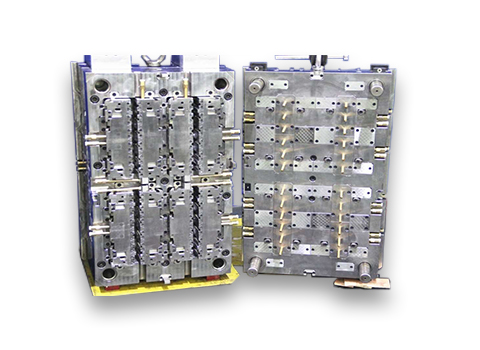
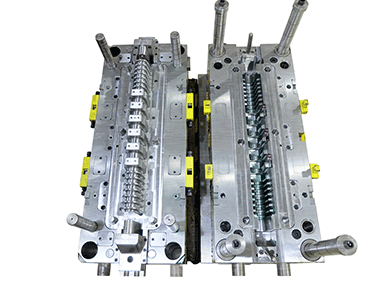
Medical molding — specifically the strategic use of high-cavitation tooling in medical plastic injection production — is the most powerful lever available to manufacturers who need to address this cost pressure at scale. By producing 48, 64, or 96 identical parts in a single injection cycle rather than 8 or 16, high-cavitation medical molding fundamentally changes the economics of mass production: more parts per machine hour, lower labor cost per unit, better machine utilization, and a faster path to the unit cost targets that global medical procurement programs demand. The challenge is that high-cavitation tooling is not simply a larger version of a standard mold — it requires advanced engineering precision, balanced runner design, optimized cooling architecture, and experienced process control to deliver the cavity-to-cavity consistency that medical-grade production requires.
Packson supports medical product manufacturers from mold design and precision tooling through to mass production optimization, with high-cavitation medical plastic injection capability designed to help buyers achieve cost-effective medical manufacturing without sacrificing the dimensional accuracy, repeatability, and quality documentation that medical disposable production demands. This guide covers the complete picture for procurement and engineering teams: why high-cavitation production matters in 2026's cost environment, what high-cavitation medical molding is and how it works, what engineering principles determine whether a multi-cavity injection mold delivers consistent quality at scale, how high-cavitation compares to lower-cavity alternatives across key ROI factors, and what procurement and maintenance practices protect tooling investment and production performance over the mold's service life. Secondary keywords relevant to this decision — high-cavitation medical molding, multi-cavity injection mold, cost-effective medical manufacturing, and medical disposable production — are addressed throughout.
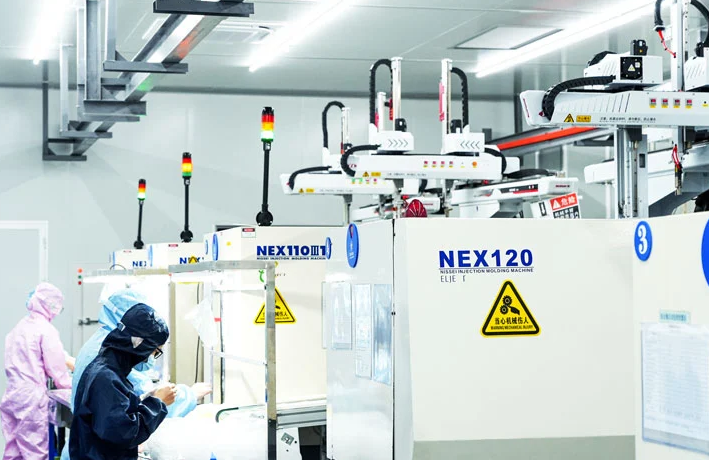
The business case for investing in high-cavitation medical molding starts with a clear understanding of the cost pressure that medical manufacturers are facing in 2026 — and why traditional low-cavity production approaches are increasingly inadequate for the volume and pricing requirements of global medical procurement.
Global centralized healthcare procurement programs — national health service bulk purchasing, hospital group consolidated tendering, and international aid organization supply contracts — have created a procurement environment in which unit price is the primary competitive variable for medical disposable components. Manufacturers who cannot demonstrate a credible path to the unit cost targets set by these programs are excluded from consideration regardless of their quality credentials. And the unit cost targets set by centralized procurement programs in 2026 are significantly more demanding than they were five years ago — driven by the combination of healthcare budget pressure, increased global competition, and the expectation that manufacturing efficiency improvements should be passed through to procurement pricing.
At the same time, the quality and documentation requirements for medical disposable production have become more demanding, not less. Regulatory requirements for process validation, dimensional consistency documentation, material traceability, and quality management system certification have all increased — adding cost to the compliance side of the production equation at the same time that procurement pressure is reducing the revenue side. The manufacturers who can navigate this dual pressure — lower unit cost and higher compliance cost — are those who have invested in production efficiency improvements that reduce the variable cost per unit without increasing the compliance risk per unit.
Low-cavity tooling — 8-cavity, 16-cavity, or 24-cavity molds — is appropriate for pilot production, design validation, and low-volume supply. But in mass production, low-cavity tooling creates a cost ceiling that becomes increasingly difficult to overcome as volume requirements grow. The machine-hour cost per part is higher because fewer parts are produced per cycle. The labor cost per unit is higher because the same handling, inspection, and packaging effort is spread across fewer parts. The production schedule is longer because more cycles are required to meet the same volume target. And the capacity bottleneck risk is higher because any production interruption has a proportionally larger impact on output.
For medical disposable production at the volumes required by global procurement programs — millions of units per year for syringe components, pipette tips, diagnostic consumables, and similar products — the unit cost difference between 16-cavity and 64-cavity production can be the difference between winning and losing a tender. High-cavitation medical molding is not a luxury investment for manufacturers at this scale — it is a competitive necessity.
Understanding what high-cavitation medical molding actually involves — and why it is technically more demanding than simply scaling up a standard injection mold — is essential for manufacturers evaluating whether their current tooling strategy is optimized for mass production profitability.
Medical molding refers to the plastic injection molding process used to produce medical-grade components, devices, and disposable products under strict quality, consistency, and material requirements. It requires stable mold design, precise injection control, validated production processes, suitable medical-grade materials, and rigorous quality inspection — requirements that apply to every cavity in the mold, not just the mold as a whole.
High-cavitation medical molding means that one injection mold contains many identical cavities, allowing multiple parts to be produced in a single machine cycle. The production efficiency advantage of high-cavitation tooling is straightforward: a 64-cavity mold produces four times as many parts per cycle as a 16-cavity mold, using the same machine time, the same energy, and approximately the same labor. The engineering challenge is equally straightforward: every one of those 64 cavities must produce a part that meets the same dimensional tolerance, the same surface quality, and the same material properties as every other cavity — cycle after cycle, across millions of production cycles.
| Mold Cavitation | Typical Application | Production Advantage |
|---|---|---|
| 8 to 16 cavities | Trial production, design validation, low volume | Lower tooling complexity, faster development |
| 24 to 32 cavities | Growing volume projects, medium production | Better cost efficiency than low-cavity |
| 48 cavities | Mass production | Strong output with manageable engineering complexity |
| 64 cavities | High-volume disposable production | Lower unit cost with advanced process control |
| 96 cavities | Ultra-high-volume medical consumables | Maximum output efficiency for stable, mature products |
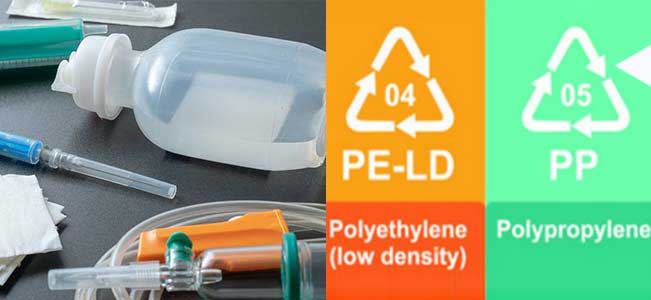
High-cavitation tooling delivers the greatest ROI for medical disposable production where the product design is stable, the annual volume is large, and the part geometry is suitable for multi-cavity replication: syringe components, pipette tips, diagnostic test components, medical caps and closures, tube connectors, IV-related plastic parts, inhaler and respiratory components, disposable surgical components, medical packaging components, and laboratory consumables.
The difference between a high-cavitation medical mold that delivers consistent quality across millions of production cycles and one that produces unacceptable cavity-to-cavity variation lies in the engineering precision of five critical mold systems — each of which must be designed and manufactured to a standard that scales with the number of cavities.
Balanced runner design is the most fundamental engineering requirement for high-cavitation medical molding. A balanced runner system ensures that molten plastic travels the same distance and experiences the same pressure drop to reach every cavity in the mold — so that every cavity fills at the same rate, with the same material temperature, and to the same packing pressure. In a geometrically balanced runner system, the runner layout is designed so that the flow path from the injection point to every cavity is identical in length and cross-section. In a naturally balanced system, this is achieved through the physical geometry of the runner layout. In a rheologically balanced system, runner cross-sections are adjusted to compensate for flow imbalances that arise from the non-Newtonian behavior of the polymer melt. For 48-cavity, 64-cavity, and 96-cavity molds, achieving adequate runner balance requires advanced mold flow analysis and careful runner geometry optimization — not simply scaling up a lower-cavity runner design.
Precision cavity matching ensures that every cavity in the mold produces parts with the same dimensional characteristics. In a high-cavitation mold, each cavity must be machined to the same tolerance — typically within a few micrometers for critical medical component dimensions — so that parts from different cavities are interchangeable and all meet the product specification. Cavity-to-cavity dimensional variation that would be acceptable in a low-cavity mold can become a significant quality problem in a 96-cavity mold, where even a small percentage of out-of-tolerance cavities can generate a large absolute volume of defective parts.
Optimized cooling channel design is the engineering system that most directly affects cycle time — and therefore production efficiency and unit cost. Cooling time typically accounts for 50 to 70 percent of the total injection molding cycle time, and reducing cooling time by even a few seconds can have a significant impact on annual output and unit cost at high-cavitation production volumes. Effective cooling channel design places cooling channels as close as possible to the cavity surfaces, maintains uniform coolant flow across all cavities, and minimizes the temperature differential between the hottest and coolest points in the mold — reducing both cycle time and the dimensional variation caused by non-uniform cooling.
Stable ejection system design is particularly critical for medical disposable production, where parts are often small, thin-walled, or geometrically complex. The ejection system must release every part from every cavity cleanly and consistently — without scratches, stress marks, deformation, or dimensional distortion — across millions of production cycles. In a high-cavitation mold, ejection system wear and misalignment can affect multiple cavities simultaneously, making ejection system design and maintenance a significant factor in long-term mold performance.
Process window control is the production engineering discipline that translates good mold design into consistent part quality across long production runs. A stable process window — defined injection pressure, temperature, speed, and cooling time parameters that consistently produce parts within specification — reduces scrap rate, improves yield, and supports the process validation documentation that medical-grade production requires. Maintaining a stable process window across a 96-cavity mold requires more sophisticated process monitoring and control than a 16-cavity mold — but the investment in process control capability pays back through lower scrap rates and more reliable quality documentation.
The decision to invest in high-cavitation tooling for a medical disposable production program is fundamentally an ROI decision — and making that decision correctly requires a systematic comparison of the cost, output, and quality implications of different cavitation levels across the full production lifecycle.
| Selection Factor | Low-Cavity Mold | High-Cavitation Mold |
|---|---|---|
| Initial tooling investment | Lower | Higher |
| Output per cycle | Lower | Significantly higher |
| Unit cost in mass production | Higher | Lower |
| Machine utilization efficiency | Lower | Higher |
| Labor cost per unit | Higher | Lower |
| Mold engineering complexity | Lower | Higher |
| Process control requirements | Standard | Advanced |
| Maintenance demand | Lower | Higher but manageable |
| Best application | Trial runs, low volume, design validation | Mass production, stable products, large annual volume |
| ROI timeline for large volume | Slower | Faster |
| Quality control per cavity | Simpler | Requires stronger process discipline |
High-cavitation tooling delivers the strongest ROI when the production program has the following characteristics: stable product design that is unlikely to require significant mold modifications after tooling investment, large annual volume that justifies the higher upfront tooling cost through lower unit cost over the production lifecycle, strong cost-reduction pressure from centralized procurement or competitive tendering, tight delivery schedule that requires high output per machine hour, high repeatability requirements that benefit from the consistency of a well-designed multi-cavity injection mold, and a long product lifecycle that allows the tooling investment to be amortized over a large total production volume.
High-cavitation medical molding delivers the most value for manufacturers of high-volume medical disposable production items: syringe barrel and plunger components for large-scale vaccination and medication delivery programs, pipette tips for diagnostic laboratory and research applications, diagnostic test components for point-of-care and laboratory testing systems, medical caps and closures for pharmaceutical packaging and IV systems, tube connectors and fittings for fluid management systems, inhaler and respiratory device components for chronic disease management, and laboratory consumables for clinical and research applications where consistent dimensional performance is critical for assay accuracy.
Investing in high-cavitation medical molding tooling requires systematic pre-procurement evaluation of both the production program requirements and the supplier's engineering capability — and ongoing mold maintenance practices that protect tooling investment and production performance over the mold's service life.
Before selecting a high-cavitation medical plastic injection partner, manufacturers should confirm the following:
Confirm the target annual production volume and verify that it justifies the higher upfront investment in high-cavitation tooling — calculate the break-even volume at which high-cavitation tooling becomes more cost-effective than lower-cavity alternatives
Confirm that the product design is finalized and stable — high-cavitation tooling investment is most justified when the product design is unlikely to require significant modifications after tooling completion
Confirm the medical-grade resin specification and verify that the selected material is compatible with the intended mold design, cooling system, and ejection system
Confirm the dimensional tolerance requirements for critical features and verify that the supplier's cavity machining capability can consistently achieve these tolerances across all cavities
Confirm the target cycle time and verify that the proposed cooling system design can achieve this target while maintaining dimensional consistency
Confirm the appropriate cavitation level — 48, 64, or 96 cavities — based on the annual volume target, machine capacity, and unit cost requirement
Request mold flow analysis results demonstrating runner balance and cavity filling consistency before tooling commitment
Confirm the hot runner system specification if applicable — hot runner systems can improve material efficiency and cycle time for high-cavitation medical molding but add complexity and maintenance requirements
Confirm the quality inspection plan for the finished mold — cavity-level dimensional verification, runner balance testing, and process window validation before production release
Confirm the validation documentation support — IQ, OQ, PQ documentation capability for medical device manufacturing requirements
Confirm the mold maintenance plan and spare parts availability for long-term production support
Request references or case studies from comparable high-cavitation medical molding projects
Clean cavities and runner systems at regular intervals according to the maintenance schedule — contamination buildup in cavities or runners can cause dimensional variation and surface defects that affect part quality
Inspect gates for wear or blockage at each maintenance interval — gate wear is a common cause of filling imbalance in high-cavitation molds and should be addressed before it affects cavity-to-cavity consistency
Check cooling channels for scale, contamination, or flow restriction — reduced cooling efficiency increases cycle time and can cause dimensional variation from non-uniform cooling
Maintain hot runner temperature control systems according to the manufacturer's specifications — temperature variation in the hot runner system is a primary cause of filling imbalance in hot runner high-cavitation molds
Monitor cavity pressure and filling consistency using process monitoring data if sensors are installed — early detection of filling imbalance allows corrective action before defect rates increase
Lubricate ejector pins, slides, and lifters according to the maintenance schedule — inadequate lubrication is a common cause of ejection system wear and part damage in high-cavitation molds
Track cavity-level defect trends using statistical process control data — identifying which cavities are producing out-of-tolerance parts allows targeted maintenance intervention before overall defect rates increase
Replace worn cavity inserts before defect rates increase to unacceptable levels — proactive insert replacement is more cost-effective than reactive replacement after a quality escape
Store molds in a clean, dry, temperature-controlled environment when not in production — proper storage prevents corrosion, contamination, and dimensional distortion during storage periods
Keep detailed maintenance records for each mold — maintenance history, repair records, and process parameter changes should be documented for quality traceability and regulatory compliance purposes
Revalidate process parameters after any major mold repair or component replacement — changes to mold geometry or surface condition can affect the process window and require revalidation before production resumes
In 2026, medical manufacturers competing in a global procurement environment defined by cost pressure, quality requirements, and delivery speed cannot afford to leave production efficiency on the table. High-cavitation medical molding — 48-cavity, 64-cavity, and 96-cavity tooling designed and manufactured to the precision standards that medical-grade production requires — provides the most powerful available path to lower unit cost, higher machine utilization, and stronger mass production profitability for medical disposable production programs.
But the ROI of high-cavitation tooling is not automatic. It depends on the engineering precision of the mold design, the quality of the runner balance and cooling system, the stability of the process window, and the discipline of the maintenance program. Manufacturers who invest in high-cavitation tooling without the engineering capability to design, validate, and maintain it correctly will not achieve the unit cost and quality consistency benefits that the investment promises.
Packson helps medical product manufacturers turn high-volume production requirements into cost-effective medical manufacturing solutions through advanced multi-cavity injection mold design, precision tooling, and reliable medical plastic injection production support. With experience in high-cavitation medical molding and a systematic approach to mold design, process validation, and production optimization, Packson provides the engineering partnership that medical manufacturers need to maximize ROI from their tooling investment.
Contact Packson today to discuss your medical component design, annual volume target, material specification, tolerance requirements, cavitation strategy, and ROI goals. The Packson team can help evaluate whether a 48-cavity, 64-cavity, or 96-cavity medical molding solution is the right fit for your mass production program — and provide the mold flow analysis, tooling design, and production support that your project requires.
Q1: What is medical molding and how does it differ from standard injection molding?
Medical molding is the injection molding process used to produce plastic medical components and disposable products under strict quality, consistency, material, and documentation requirements. It differs from standard injection molding in its tighter dimensional tolerances, validated production processes, medical-grade material requirements, and regulatory compliance documentation — requirements that apply to every cavity in the mold across every production cycle.
Q2: What is high-cavitation medical molding and what cavitation levels are available?
High-cavitation medical molding uses a mold with many identical cavities — typically 48, 64, or 96 — to produce multiple parts in a single injection cycle. The appropriate cavitation level depends on the annual volume target, unit cost requirement, part geometry, and machine capacity. Higher cavitation levels produce more parts per cycle but require more advanced engineering precision and process control.
Q3: How does high-cavitation molding reduce unit cost in medical disposable production?
It increases the number of parts produced per machine cycle, which reduces the machine-hour cost, labor cost, and overhead cost allocated to each part. For large annual volumes, the unit cost reduction from moving from 16-cavity to 64-cavity production can be substantial — often sufficient to meet the unit cost targets set by centralized healthcare procurement programs.
Q4: Is high-cavitation tooling always the best choice for medical plastic injection projects?
No. High-cavitation tooling delivers the strongest ROI for stable, high-volume products with long production lifecycles. For low-volume projects, products still under design development, or pilot production programs, lower-cavity tooling is more cost-effective and allows faster design iteration without the risk of expensive tooling modifications.
Q5: What should buyers evaluate when selecting a high-cavitation medical molding supplier?
Buyers should evaluate mold design capability for high-cavitation tooling, mold flow analysis capability, cavity machining precision, runner balance engineering, cooling system design, process validation documentation support, quality inspection systems, production capacity, mold maintenance capability, and experience with comparable medical disposable production programs.

Contact Us
 English
  日本語
日本語  Deutsch
  Español