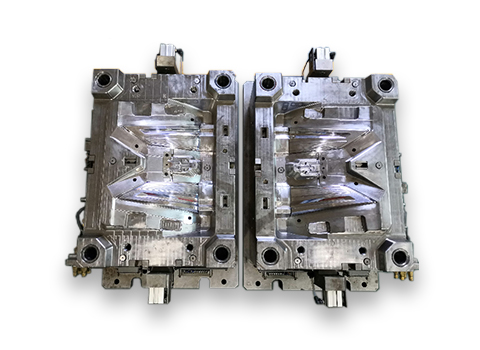
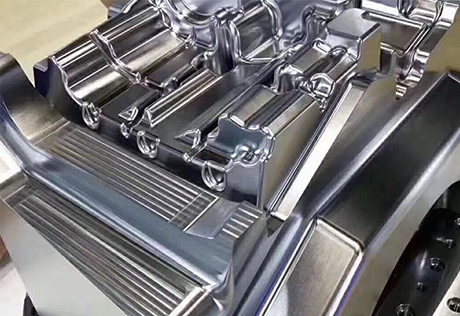
Tooling decisions made at the beginning of a project can affect production cost, delivery efficiency, and manufacturing flexibility for years. For buyers, the key question is not simply how many parts a mold can produce at once, but whether the selected tooling setup fits the expected order volume, available equipment, quality requirements, and long-term production plan.
As demand increases, a tooling configuration that works well for early production may become inefficient, while a higher-capacity tool can be unnecessarily expensive for a product that has not yet reached stable volume. This is why the choice between a single injection molding cavity and a multi cavity mould should be based on the economics and technical requirements of the entire production program rather than tooling price alone.
There is also another tooling concept that buyers sometimes confuse with conventional multi-cavity tooling: the family injection mold. While both designs contain more than one cavity, a family mold typically produces different components in the same molding cycle, whereas a conventional multi-cavity mold produces several identical parts. That difference can have a significant impact on filling balance, process control, production planning, and inventory management.
Understanding how these tooling strategies affect output, machine requirements, quality consistency, and future capacity can help buyers select a mold that supports both current demand and realistic growth.
Expected production volume is usually the first factor to consider when deciding how many cavities should be built into a mold. A lower-volume project does not necessarily benefit from a high cavity count, particularly when the product is still being validated or market demand remains uncertain.
A mold with one injection molding cavity can be a practical choice for early-stage production because the tooling structure is generally simpler and the upfront investment can be easier to control. It also gives the buyer more flexibility if the product design needs to be revised after initial production or market feedback.
As order quantities increase, however, the economics begin to change. A single cavity produces only one component per molding cycle, which means higher demand requires more machine time. If the product needs to be manufactured in larger batches or within shorter delivery windows, this can eventually become a capacity constraint.
A multi cavity mould increases the number of identical parts produced in one molding cycle. When demand is stable and the molding process is well controlled, this can improve machine utilization and reduce the amount of machine time allocated to each finished component.
Buyers should therefore look beyond annual volume alone. Batch size, order frequency, seasonal demand, delivery schedules, and expected program life can all affect the most suitable cavity strategy.
For example, two projects may require the same total annual quantity, but one may be ordered in small monthly batches while the other requires several large production runs within a short period. The second project may need greater output capacity even though the annual demand is identical.
Adding cavities is not simply a matter of duplicating the same part geometry several times inside a larger mold base. Each additional injection molding cavity changes how the tool must distribute material, remove heat, eject components, and maintain consistent processing conditions.
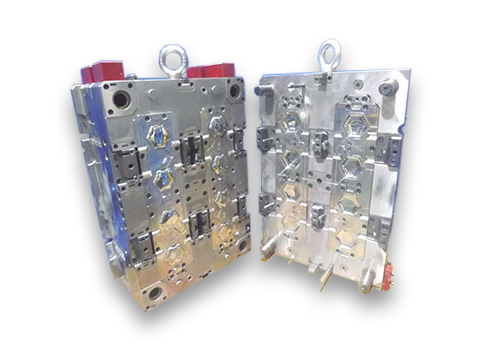
A multi cavity mould generally requires a more complex runner system, more detailed cooling design, additional ejector components, a larger mold base, and more machining work than a comparable single-cavity mold. Depending on the part and production target, a hot runner system or other flow-control solution may also be considered.
These factors increase tooling investment, but higher tooling cost does not automatically mean poorer economics. For sufficiently high production volumes, the ability to manufacture several parts within one molding cycle can offset the higher initial cost over the life of the project.
Buyers should also understand the difference between a multi-cavity tool and a family injection mold. In a conventional multi-cavity design, the cavities usually contain the same component geometry. This makes it easier to aim for similar filling, cooling, and shrinkage behaviour throughout the mold.
A family tool, by contrast, contains different components. Those parts may vary in size, wall thickness, flow length, projected area, and cooling requirements. Producing them together can reduce the number of separate molds required, but balancing the process may be more demanding.
| Tooling Type | Parts Produced Per Cycle | Main Advantage | Main Limitation | Typical Use |
|---|---|---|---|---|
| Single-Cavity Mold | One part | Lower tooling complexity and easier initial investment control | Lower output per cycle | Low-volume, new, or frequently changing products |
| Multi Cavity Mould | Multiple identical parts | Higher output and improved machine utilization | Greater tooling complexity and cavity-balancing requirements | Stable medium- and high-volume production |
| Family Injection Mold | Multiple different parts | Can produce related components together | Different part geometries may be harder to balance | Assemblies or matched component groups with aligned demand |
The most useful tooling comparison should be based on total production economics rather than mold price alone.
A single-cavity mold may cost less to build initially, but each finished component uses an entire molding cycle. This can be perfectly acceptable when quantities are moderate. As demand increases, however, the accumulated machine time required to produce each order may become a larger contributor to the total part cost.
A multi cavity mould spreads the same molding cycle across several finished parts. If four acceptable parts are produced during one cycle instead of one, the machine is generating more output during the same period. The actual economic benefit will depend on cycle time, material use, machine size, labor requirements, tooling cost, maintenance, and production demand.
For this reason, higher cavity count should not be viewed as automatically better. A complex mold can require a larger upfront investment, more involved maintenance, and more detailed process validation. If the expected volume never materializes, the buyer may not recover that additional tooling investment.
On the other hand, choosing too few cavities for a mature high-volume program can result in excessive machine utilization, longer production schedules, and pressure to purchase duplicate tooling later.
The strongest approach is to compare several realistic tooling scenarios against forecast production volume. Buyers evaluating different configurations can review Packson Mold's mold manufacturing and injection molding capabilities when considering how tooling structure should support production requirements.
The commercial comparison should include not only tooling price, but also projected machine hours, batch frequency, expected program life, production capacity, material consumption, maintenance, and the possibility of future demand growth.
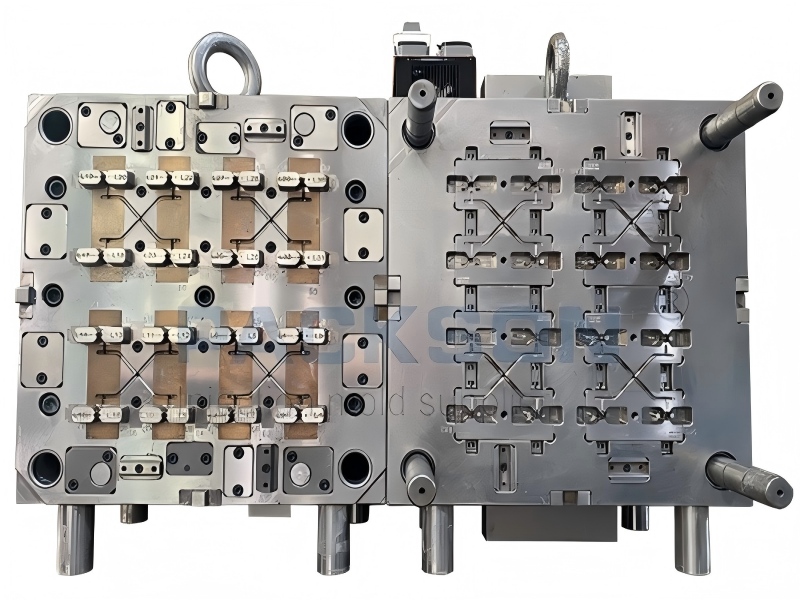
There is always a practical limit to the number of cavities that can be added to a mold, and that limit is not determined by available mold space alone.
Every additional injection molding cavity increases the total amount of material that needs to be injected during each shot. The completed mold may also become larger and heavier, while the projected area of all cavities increases the clamp force required to keep the tool securely closed during injection.
The molding supplier therefore needs to check whether the intended machine has sufficient shot capacity, clamp force, platen dimensions, tie-bar spacing, mold thickness allowance, and injection performance for the proposed tool.
A larger multi cavity mould may also place greater demands on the cooling system. Producing more components per cycle means that more heat must be removed consistently from the mold. If cooling is uneven, individual cavities can experience different shrinkage behaviour, dimensional results, or cycle stability.
Part geometry can further limit cavity count. A compact component with a simple mold structure may allow many cavities to be arranged efficiently. A larger product with slides, lifters, inserts, threaded cores, or other mechanisms may require significantly more space for each cavity.
This is why cavity count should be reviewed together with actual machine capability. Selecting a higher-output mold that forces the molding machine to operate near an unstable process limit can create more quality and production problems than it solves.
Higher output has value only when all cavities produce acceptable parts consistently.
In a well-designed multi cavity mould, material should reach each cavity under sufficiently similar conditions. Runner layout, gate design, venting, cavity machining, cooling channels, and mold temperature control all contribute to cavity-to-cavity consistency.
If one injection molding cavity fills earlier than another or cools differently, the resulting parts may not be identical even though they are produced during the same molding cycle. Differences can appear in dimensions, weight, appearance, warpage, sink, or other quality characteristics.
For components with tighter tolerance or functional requirements, cavity-specific inspection can therefore be more useful than evaluating randomly mixed parts from the entire mold. Individual cavities can be identified so that measurements and quality data can be traced back to the exact cavity that produced the component.
This approach also makes troubleshooting easier. If one cavity begins to produce defects while the others remain stable, production teams can investigate local causes such as gate wear, vent contamination, cooling restrictions, ejector issues, or cavity damage.
A family injection mold requires even more careful consideration because its cavities contain different components. One part may fill quickly while another has a longer flow path. One may cool rapidly while another requires more time. These differences can make it harder to find a processing window that suits every component equally well.
For this reason, family tooling should be selected because the component combination makes engineering and production sense, not merely because several parts belong to the same final assembly.
Tooling should support current production without creating unnecessary limitations if demand increases later.
For a new product with uncertain sales, beginning with a lower-cavity tool can reduce capital exposure. It may also make design changes easier to manage during the early stages of the program. Once the component has been validated and demand becomes more predictable, the manufacturer can consider adding duplicate tools or investing in a larger multi cavity mould.
For established products with a reliable production forecast, building a higher-capacity tool from the beginning may provide better long-term economics and reduce the risk of capacity shortages later.
Buyers should also compare the value of one large mold against several smaller production molds. Two moderate-capacity tools can sometimes provide more flexibility than a single high-cavity tool because production may continue on one mold while the other is being serviced. Multiple tools may also provide additional options for production scheduling across different machines.
The situation is different for a family injection mold. When different components are produced together, their required quantities should remain reasonably aligned. If demand for one part increases while another remains unchanged, every production run may create excess inventory of the lower-demand component.
This is an important issue for assemblies where component consumption may change over time. Separate tools may cost more initially but provide greater flexibility if the parts need to be ordered in different quantities later.
At Packson Mold, cavity planning can be reviewed together with part geometry, expected order quantity, resin selection, molding machine requirements, quality targets, and future production plans. Buyers preparing a new project can contact Packson Mold to discuss the tooling configuration before committing to a final cavity strategy.
There is no universal cavity count that works for every injection molding project. The right tooling strategy depends on how much product needs to be manufactured, how stable the design is, what equipment will run the mold, how much capacity is required, and how long the product is expected to remain in production.
A single injection molding cavity can be a sensible choice for lower-volume or early-stage projects because it keeps tooling relatively simple and reduces initial investment. A multi cavity mould becomes more attractive when demand is stable and the additional output can justify greater tooling complexity and capital cost.
A family injection mold serves a different production purpose. It can manufacture several related components in the same cycle, but differences between those parts may make process balancing and production planning more complicated.
For buyers, the most effective approach is to evaluate tooling cost, machine capacity, cavity balance, quality control, production forecast, and future scale-up together. Making that decision before the tool design is finalized can help avoid both unnecessary investment and insufficient production capacity later in the program.
A single-cavity mold produces one part per molding cycle, while a multi cavity mould produces several identical parts during the same cycle. Multi-cavity tooling can increase production output but normally requires greater tooling investment and more careful process balancing.
It is usually worth considering when demand is stable, production volume is high enough to justify greater tooling investment, and reducing machine time per part provides a meaningful manufacturing benefit.
No. More cavities can improve output, but they also increase mold size, complexity, maintenance requirements, and upfront cost. The most economical injection molding cavity count depends on actual production volume and expected program life.
A family injection mold contains cavities for different components that are molded during the same cycle. It can reduce the number of separate tools required, but the different part geometries may make filling, cooling, and production balance more difficult.
Yes. Cavity-to-cavity variation can occur if filling, cooling, venting, machining, or gating conditions differ. For precision parts, suppliers often evaluate samples by cavity to confirm that each position meets the required specification.
That can be a practical strategy when demand is uncertain or the product design may still change. For a mature product with predictable high-volume demand, starting with a properly designed multi cavity mould may provide better long-term production efficiency.

Contact Us

 English
  日本語
日本語  Deutsch
  Español